We will be following a mixture of Montessori and Cambridge syllabus
Practical life activities continue well into the primary classroom as well, but with the children now planning and directing these activities, it is now integrated with the day- to- day care of the classroom and its occupants. Tasks may include preparation of snack and daily meals and watering of plants and care of animals. Elementary children dust the shelves, organize and straighten the materials, sweep and vacuum, and keep the classroom neat and clean.
Sensorial Activities: Materials are designed to help children become more perceptive, to understand concrete concepts and focus on the details that will allow them to abstract into the world around them.
Language Activities: The language area includes a comprehensive spelling curriculum, word study (including antonyms, synonyms, homonyms, and compounds, as well as the parts of speech), creative writing, and research skills. Reading of every kind is highly encouraged, as children are introduced to poetry, folk tales, non- fiction, and classic literature. Children are also given many opportunities to read out loud – giving a presentation they have written, or dramatising the work of another author. Zulu is also introduced in Year 1 in the primary environment.
Mathematics and Geometry Activities: The math area begins with the Golden Bead material to teach beginning math concepts (place value, quantity/symbol association, and concrete addition, subtraction, multiplication, and division). The materials bring a “hands- on” quality to the classroom, with children learning through trial and error, self- discovery, and teaching from other children. The materials quickly move the child to an abstraction of math concepts, including problem solving, fractions, borrowing and carrying, graphing, measurement, long division, and algebraic equations.
Cultural Activities: Botany and zoology encompass a wide field of biological study. Matching cards are used to learn the characteristics of many plants and animals, and charts aid in the classification of the plant and animal kingdoms. After this first knowledge is gained, children begin to research on their own, using their knowledge of specific plant and animal species.
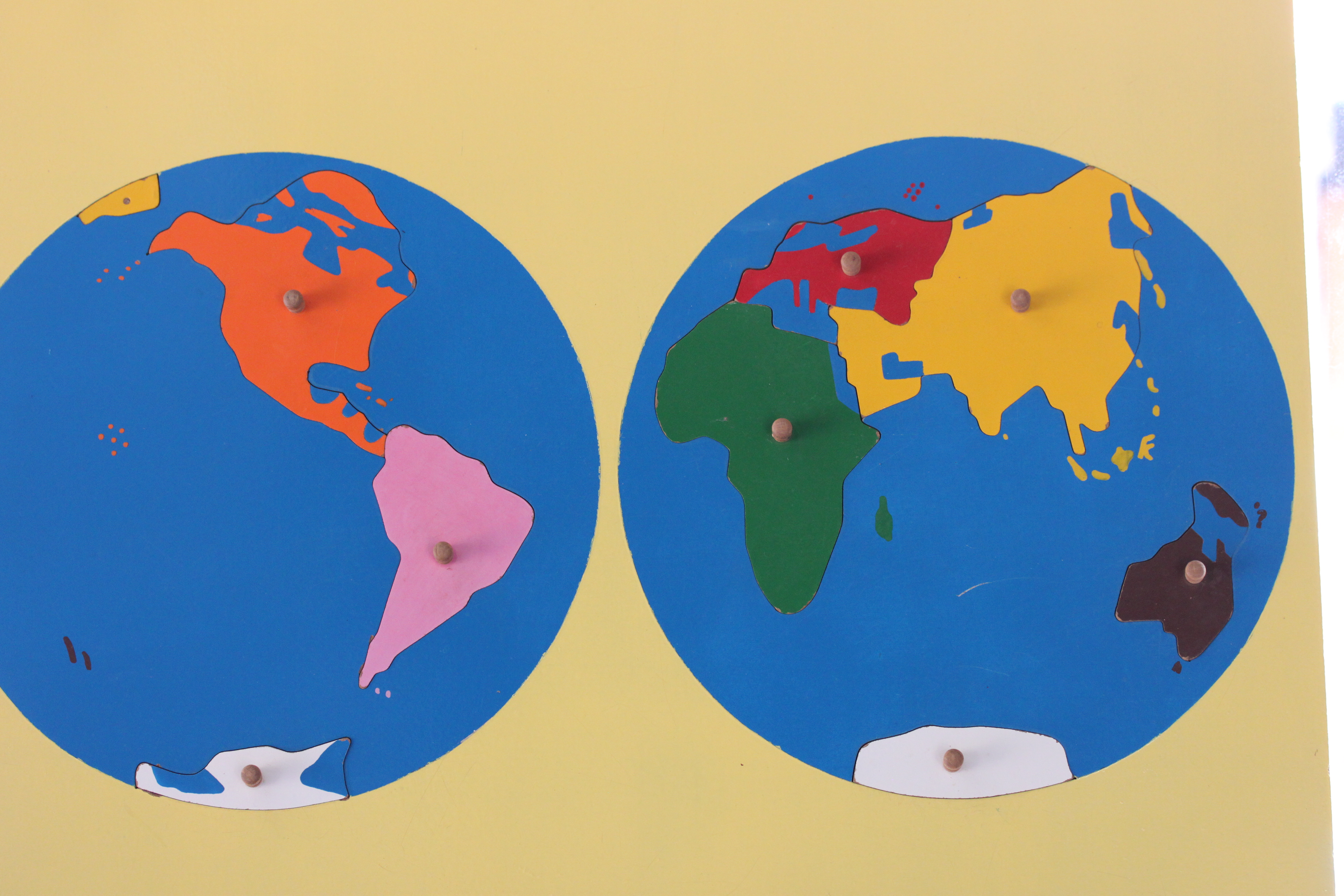
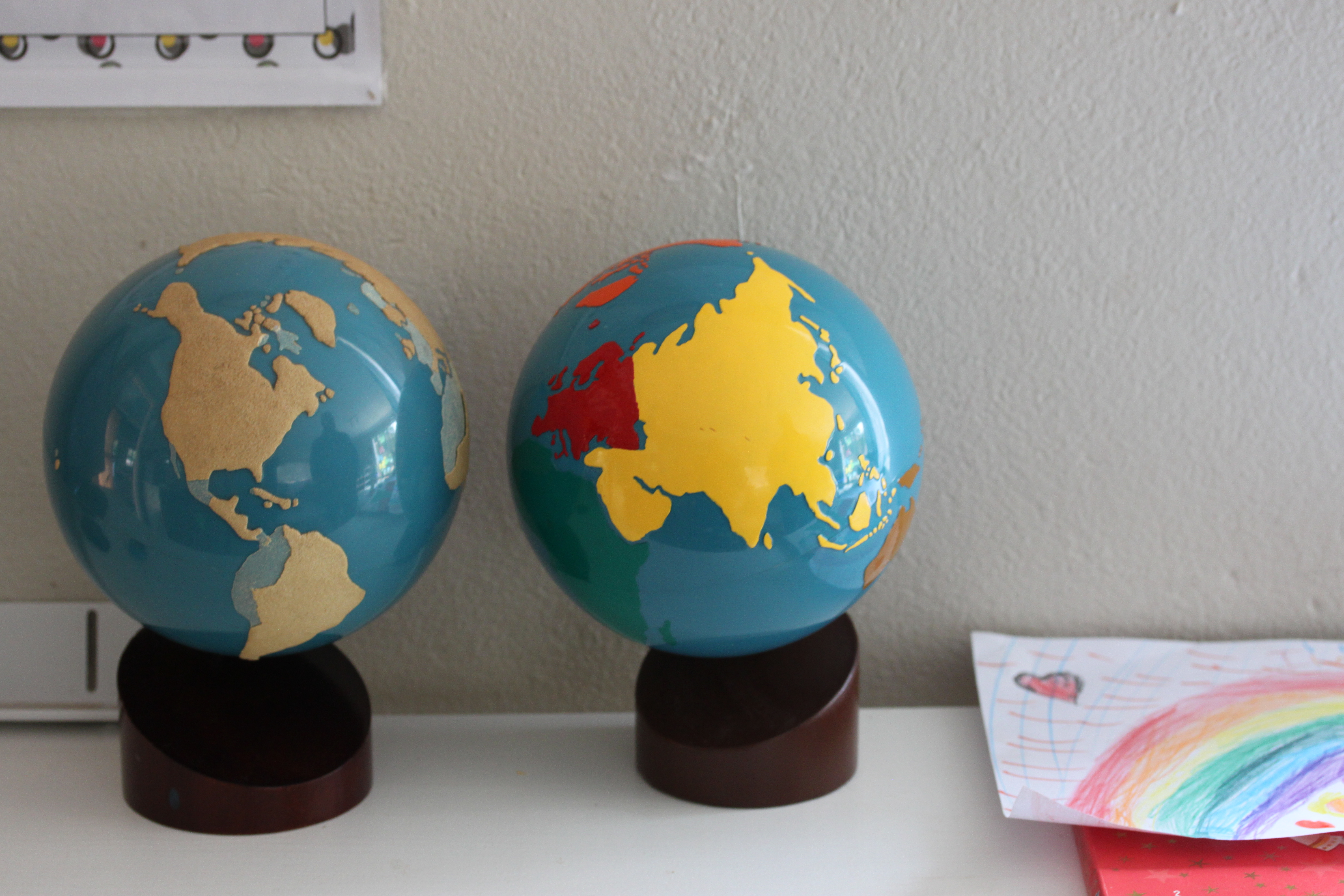
Geography and history include the study of civilizations and countries. Wooden puzzle maps of each continent are studied, with children learning the names, flags, animals, cultures, and geographic features of each country. History begins with the study of time, including clocks, calendars, and timelines. As various fundamental needs of people (like shelter, transportation, food, and clothing) are explored, the children research and chart changes in these needs over time and across cultures.